

1-100 t/h (0.7-70 MW)
WNS Gas/Oil Steam Boiler, 1-100 t/h
Packaged three-pass wet-back fire-tube steam boiler for gas and oil, 1-100 t/h at 1.25 MPa, with matched modulating burner and ful...
View detailsTwo 3 t/h gas steam boilers supply cooking, drying and CIP steam at a seasoning plant in Lagos, with N+1 redundancy and a gas train rated for local supply pressure.
The seasoning plant in Lagos makes bouillon cubes and packaged spices, and its steam load is 2-2.5 t/h for cooking and drying, with a 2.8 t/h peak when the CIP set runs. Two 3 t/h WNS gas boilers at 1.0 MPa were installed so that one carries the load and the other stands ready, rather than a single 3 t/h unit running flat out.
The plant’s gas arrives at a lower pressure than the burner’s nominal requirement, so the gas train was sized for 15-25 kPa inlet with a booster fan downstream. That single detail decided the burner selection: a standard train would have tripped on low pressure every afternoon.
Each boiler absorbs about 2.1 MW at rating. On gas at 34 MJ/Nm3 and 93% efficiency the full-load rate is about 240 Nm3/h. The plant runs one boiler at 70-85% and rotates weekly, which keeps both units exercised and spreads maintenance.
| Item | Value |
|---|---|
| Installed capacity | 2 x 3 t/h |
| Pressure | 1.0 MPa |
| Average / peak load | 2.0-2.5 / 2.8 t/h |
| Gas inlet pressure | 15-25 kPa |
| Efficiency | about 93% |
| Feedwater | softened, deaerated |
The booster is a dry-running screw compressor with a pressure switch and a non-return valve, installed outdoors under a canopy. The burner management system proves gas pressure, air pressure and flame before each start, and the double-block-and-bleed train is leak-tested daily.
Nigeria’s gas composition varies by supplier, and the plant keeps a quarterly analysis on file. The burner was commissioned on the first analysis and re-trimmed once when the supplier changed; CO stayed under 25 ppm.
The plant’s borehole water is hard and high in iron. A softener plus an iron filter keeps hardness below 0.03 mmol/L, and the deaerator removes oxygen at 105 °C. Steam is used in jacketed kettles and a rotary dryer, so the plant holds TDS at 2,000 ppm and checks steam dryness at the header monthly.
The plant has run two years without a production stop for boiler reasons, including one period when a boiler was opened for its annual inspection. Gas consumption per tonne of product fell by 11% against the old single boiler, mostly because the plant can now run a unit at a reasonable firing rate instead of cycling a larger one.
1-100 t/h (0.7-70 MW)
Packaged three-pass wet-back fire-tube steam boiler for gas and oil, 1-100 t/h at 1.25 MPa, with matched modulating burner and ful...
View details
0.1-2 t/h
Multi-pass packaged steam generator, 0.1-2 t/h at 0.4-0.7 MPa, small water content and fast start for pressing, food and sterilizi...
View details
2-50 m³/h treated water
Softener and deaerator package for boiler make-up, holding hardness below 0.03 mmol/L and oxygen below 0.05 mg/L.
View details
1-20 t/h boiler equivalent
Finned tube economizers and tubular air preheaters for fire-tube, water-tube and thermal oil systems, with cold-end protection aga...
View detailsExternal links open the publisher’s website and are provided for background reading.
Redundancy and part-load efficiency. One unit covers the load at 70-85% and the other is available for maintenance rotation or a peak.
The gas train is sized for 15-25 kPa with a booster fan, so the burner sees stable pressure even when the distribution network sags.
Daily, before first start. The double-block-and-bleed arrangement makes the test a two-minute procedure.
2024
Cagayan de Oro, Philippines
4 t/h biomass steam boiler at 1.0 MPa on corn cob, commissioned in 2024 in Cagayan de Oro, Philippines: three retorts are charged...
View project
2024
Johor Bahru, Malaysia
6 t/h gas steam boiler at 1.25 MPa on natural gas, commissioned in 2024 in Johor Bahru, Malaysia: the plant is inside an industria...
View project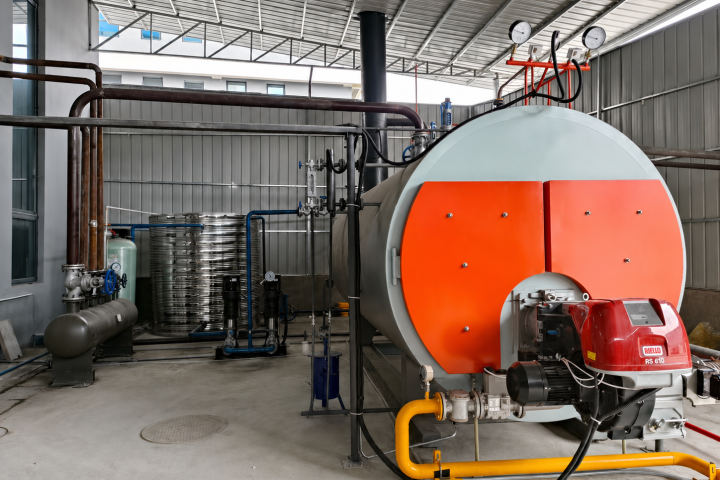
2017
Kampala, Central District, Uganda
A gas-fired steam boiler was supplied for plant-extracted oil processing in Kampala, Uganda, providing reliable steam for extracti...
View projectWe appoint one or two partners per country to quote, deliver and service our boilers locally. Territory protection, factory pricing and commissioning support are part of the agreement.