

15 t/h
15 t/h Gas/Oil Steam Boiler WNS15-1.25-Q
The WNS15-1.25-Q is a packaged three-pass wet-back fire-tube boiler delivering 15 t/h of steam at 1.25 MPa and 194 °C, firing natu...
View detailsGas-fired steam boiler package for textile and dyeing plants. SZS or WNS boilers deliver 1-20 t/h at 1.0-1.6 MPa, handling batch dyeing load swings, high condensate return, and dry saturated steam for sizing and starching.
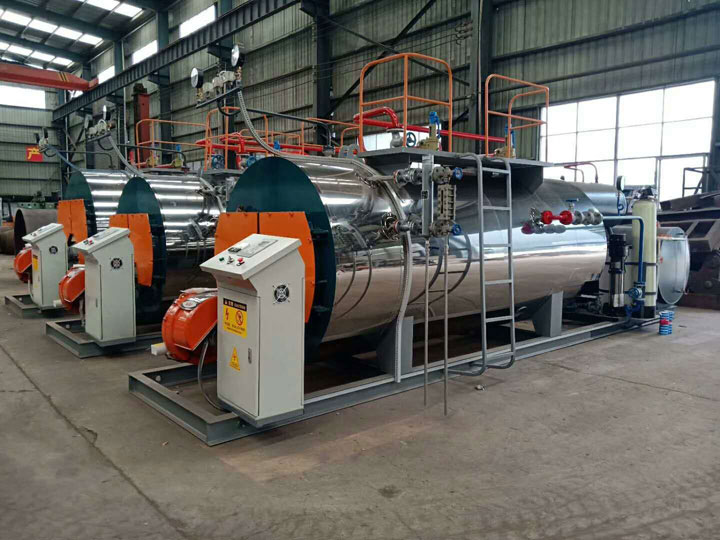
Textile and dyeing operations rely on steam for a range of thermal duties: dyeing machines, stenters, printing and washing lines. Each application has specific steam requirements. Dyeing machines need steam for heating dye baths, often with rapid response to temperature changes. Stenters require consistent heat for drying and setting fabrics. Printing and washing lines use steam for fixation and cleaning. Sizing and starching processes demand dry saturated steam to avoid wetting the fabric and to ensure proper starch penetration. The boiler package must deliver reliable steam at the required pressure and quality to maintain product consistency and process efficiency.
Steam demand in textile plants typically swings with batch dyeing cycles. During a batch, steam demand can spike as multiple dyeing machines call for heat simultaneously, then drop during idle periods. This variability requires a boiler with good turndown and responsive controls. Additionally, condensate return is often high because steam is used in closed-loop heating processes. Returning hot condensate saves energy and water, but the boiler and feedwater system must be designed to handle high condensate temperatures and volumes. Sizing the boiler involves analyzing the maximum simultaneous steam demand, the frequency of batch cycles, and the condensate return rate. A capacity range of 1-20 t/h at 1.0-1.6 MPa covers most textile and dyeing applications, but accurate sizing based on actual load profiles ensures efficient operation and avoids short cycling.
Gas-fired boilers are well-suited for textile plants due to clean combustion and ease of control. The SZS series (water-tube, double-drum) and WNS series (fire-tube, wet-back) are both viable options. SZS boilers offer high efficiency and quick response to load changes, making them suitable for larger capacities and higher pressures. WNS boilers are compact, easy to install, and provide reliable performance for smaller to medium capacities. Both types can be equipped with economizers to recover heat from flue gas, improving overall efficiency. The choice between SZS and WNS depends on capacity, space availability, and specific load requirements. Efficiency considerations should include not only combustion efficiency but also the effectiveness of heat recovery systems and the ability to maintain efficiency at part-load conditions, which are common in batch operations.
Proper water treatment is critical for boiler longevity and steam quality. Textile processes, especially sizing and starching, require dry saturated steam to prevent condensation and water spotting. The boiler package should include water softening and deaeration to remove hardness and dissolved gases. High condensate return can introduce contaminants, so monitoring and treatment of condensate are necessary. Steam separators and proper piping design help ensure dry steam at the point of use. Regular blowdown and water quality testing are essential to maintain steam purity and prevent scale and corrosion. The water treatment system should be sized to handle the boiler capacity and the expected condensate return ratio, ensuring consistent steam quality for all textile processes.
Modern boiler controls enhance operational safety and efficiency. A combustion control system maintains optimal air-fuel ratio, while feedwater control ensures stable water level. For textile plants with variable steam demand, a load-following control strategy can improve response and reduce pressure fluctuations. Safety features include flame failure detection, high-pressure and high-temperature limits, low-water cutoff, and emergency stop. The control system should also provide data logging and remote monitoring capabilities to track performance and schedule maintenance. Integration with plant-wide energy management systems can further optimize steam usage. Operator training and clear safety procedures are essential, and the boiler package should comply with relevant safety standards (without claiming specific certifications).
To prepare an accurate proposal, please provide the following information: required steam capacity (t/h) and pressure (MPa); typical load profile including batch cycles and simultaneity factors; fuel type and supply details; condensate return rate and temperature; water analysis report; available space and installation constraints; and any specific steam quality requirements for sizing and starching. Additionally, indicate if you need a complete package including water treatment, feedwater system, and controls, or a boiler-only supply. With these details, we can recommend the most suitable SZS or WNS boiler configuration and provide a tailored proposal.
Both SZS (water-tube) and WNS (fire-tube) gas steam boilers are suitable. SZS is often preferred for higher capacities and quicker load response, while WNS is compact and cost-effective for smaller to medium capacities.
Select a boiler with good turndown ratio and responsive controls. A load-following control system and proper sizing based on simultaneous demand can smooth pressure fluctuations. Consider a boiler with fast load change capability.
Dry saturated steam is essential to prevent fabric wetting and ensure proper starch penetration. Use steam separators and proper water treatment to maintain high steam dryness.
| Typical capacity | 1-20 t/h |
|---|---|
| Pressure/temperature | 1.0-1.6 MPa (saturated steam) |
| Fuel options | Natural gas, LPG, or other gaseous fuels |
| Efficiency | High efficiency with economizer (typical >90%) |
| Steam quality | Dry saturated steam (≥0.98 dryness) |
| Controls | PLC-based combustion and feedwater control, safety interlocks |
| Water treatment | Softening and deaeration recommended |
| Scope of supply | Boiler, burner, controls, economizer, feedwater pump, valves, and fittings |
| Boiler type | SZS (water-tube) or WNS (fire-tube) |
| Condensate return | Designed for high condensate return rates |
15 t/h
The WNS15-1.25-Q is a packaged three-pass wet-back fire-tube boiler delivering 15 t/h of steam at 1.25 MPa and 194 °C, firing natu...
View details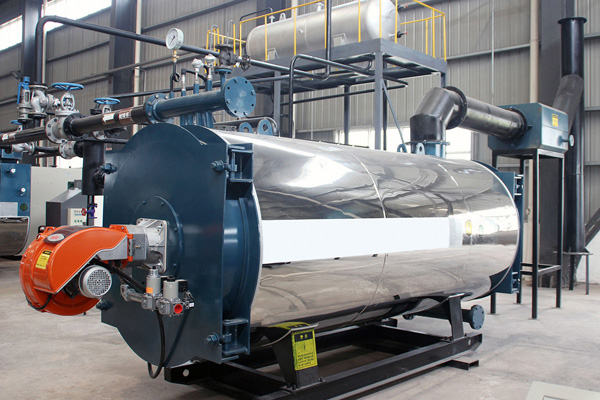
0.7-7 MW thermal oil; 1-6 t/h steam
Packaged thermal oil heaters and steam boilers for rubber and tire plants, sized for vulcanization presses, mixing and drying. The...
View details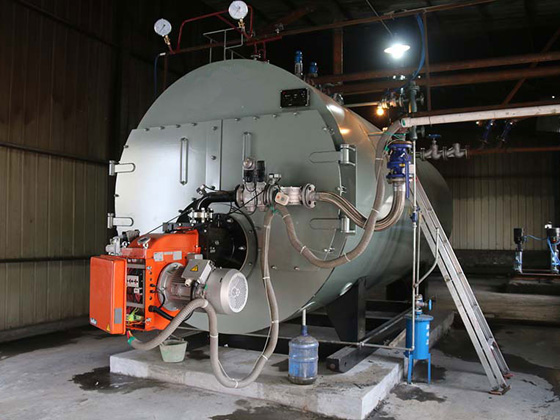
0.35-14 MW
Closed-loop pressurized hot water boiler for 95/70 and 115/70 systems, 0.35-14 MW, three-pass wet-back shell with modulating burne...
View detailsExternal links open the publisher’s website and are provided for background reading.
Include the capacity (t/h or MW), fuel, working pressure and site country so the proposal matches your permit limits.
We appoint one or two partners per country to quote, deliver and service our boilers locally. Territory protection, factory pricing and commissioning support are part of the agreement.