
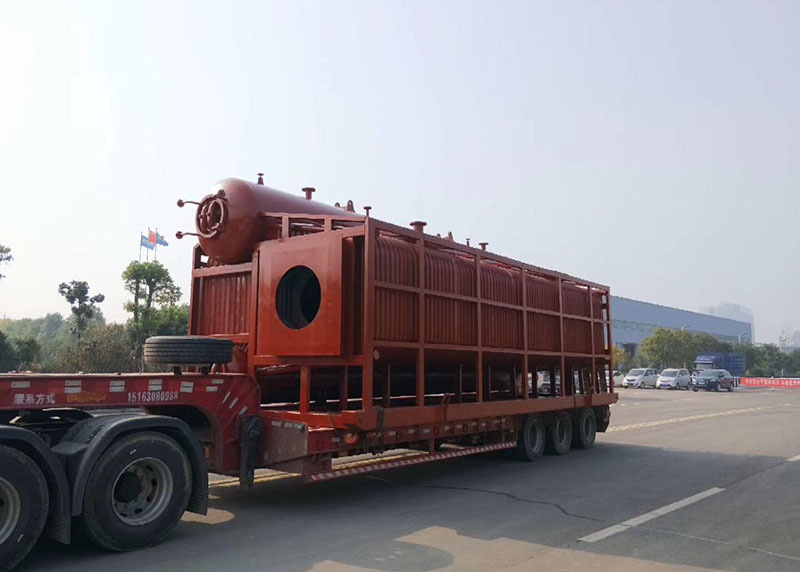
Layout decisions made during the design phase of a boiler room have a lasting impact on safety, maintenance efficiency, and operational flexibility. Insufficient clearances can make routine tasks like burner servicing or flue inspection difficult and time-consuming, while poor fuel train arrangement may complicate code compliance. This article provides practical guidance on clearances, access, flue routing, fuel train layout, spare parts storage, and future capacity planning, with reference to typical engineering values. Always verify local codes and manufacturer requirements for your specific equipment.
Minimum Clearances for Maintenance and Safety
Clearances around a boiler are governed by safety regulations (e.g., NFPA 85, EN 12953) and practical maintenance needs. The following table summarizes recommended minimum clearances for industrial boilers, assuming a boiler shell diameter up to 2.5 m and a burner requiring front access. Values are in millimetres (mm) and are measured from the outermost part of the boiler or associated equipment.
| Location | Minimum Clearance (mm) | Remarks |
|---|---|---|
| Front (burner side) | 1500 | For burner removal and tube cleaning; increase to 2000 mm for boilers >10 t/h |
| Sides | 1000 | For inspection and access to fittings; 1200 mm if manhole is on the side |
| Rear | 1000 | For flue gas box access and cleaning |
| Top | 500 | For valve and safety valve maintenance; 800 mm if steam drum is on top |
| Between boilers | 1200 | Minimum for personnel passage; 1500 mm recommended for maintenance |
These values are typical for packaged fire-tube and water-tube boilers. For larger units or those with integral economizers, consult the manufacturer. Clearances must also account for door swings, removal of tube bundles, and safe operation of valves.
Maintenance Access and Working Space
Maintenance access is not just about clearance; it’s about providing safe, ergonomic working space. Consider the following:
- Burner servicing: Allow space to withdraw the burner assembly. For a 10 MW burner, the assembly may be 2 m long, requiring at least 2.5 m of free space in front.
- Tube cleaning: For fire-tube boilers, front and rear doors must open fully. Ensure the door swing radius is unobstructed.
- Valve operation: Provide a minimum 800 mm wide access path to all valves and controls. Platforms and ladders should comply with OSHA or local standards.
- Electrical panels: Maintain 1000 mm clear space in front of electrical panels per NEC (or local code).
Plan for temporary equipment like scaffolding or mobile cranes during major overhauls. A laydown area adjacent to the boiler room can reduce downtime.
Flue Routing and Breaching
The flue gas path must be designed to minimize pressure loss and avoid condensation. Key considerations:
- Breaching size: Size the flue to maintain gas velocity between 10 and 15 m/s for horizontal runs to prevent soot deposition. For a 10 t/h boiler producing roughly 15,000 m³/h of flue gas at 200°C, a duct diameter of about 600 mm gives a velocity of ~14.7 m/s.
- Stack height: Comply with local dispersion requirements; typically 1.5 times the building height or per environmental permit.
- Expansion joints: Include expansion joints to accommodate thermal growth. For a 10 m horizontal run, expect ~30 mm expansion at 200°C.
- Access doors: Provide inspection doors at changes in direction and at the base of the stack for cleaning.
Route flues to avoid long horizontal runs and sharp elbows. Each 90° elbow adds pressure drop equivalent to 5–10 m of straight duct. Consider using our boiler products with integrated economizers to reduce flue gas temperature and improve efficiency.
Fuel Train Layout and Safety
The fuel train (gas or oil) must be arranged for safety and maintainability. For gas-fired boilers, typical components include manual shutoff valve, filter, regulator, safety shutoff valves, and leak test. Layout guidelines:
- Install the fuel train on a separate wall or skid with at least 800 mm access on all sides.
- Ensure the vent line from the regulator terminates outdoors in a safe location.
- Provide a 1000 mm clear zone around the fuel train for operation and maintenance.
- For dual-fuel boilers, allow space for both gas and oil trains; typically an additional 1.5 m length.
All fuel train components must be rated for the maximum supply pressure and comply with local gas codes (e.g., NFPA 54, EN 746-2).
Spare Parts Storage and Future Capacity
Allocate space for critical spare parts to minimize downtime. A typical spares kit includes:
- Burner nozzle and electrodes
- Flame scanner
- Gaskets and seals
- Pressure switches and gauges
- Water level controls
Provide a dedicated storage area of at least 2 m² with shelving, away from traffic and moisture. For future capacity, plan for an additional boiler or heat recovery unit. Reserve space for a second boiler with the same clearances, and consider structural provisions for a future stack. If you anticipate expansion, refer to our capacity and cost guide to understand how capacity affects space requirements.
Checklist for Boiler Room Layout
- Verify minimum clearances per manufacturer and local codes.
- Ensure unobstructed access for burner removal and tube cleaning.
- Design flue routing with minimal elbows and proper velocity.
- Provide access doors and expansion joints in flue.
- Layout fuel train with adequate access and ventilation.
- Allocate space for spare parts storage.
- Reserve space for future capacity expansion.
- Include lighting and ventilation for maintenance.
What to send us for a proposal
To prepare a tailored proposal, please provide:
- Required boiler capacity (t/h or kW) and fuel type.
- Available room dimensions and any constraints (ceiling height, door sizes).
- Flue routing constraints (stack location, height restrictions).
- Local code requirements (clearances, emissions).
- Future expansion plans.
- Any specific spare parts or service needs.
With this information, we can recommend a layout that balances safety, maintainability, and cost. Note that costs are driven by boiler size, materials, controls, and site-specific engineering—not just the boiler itself.


