
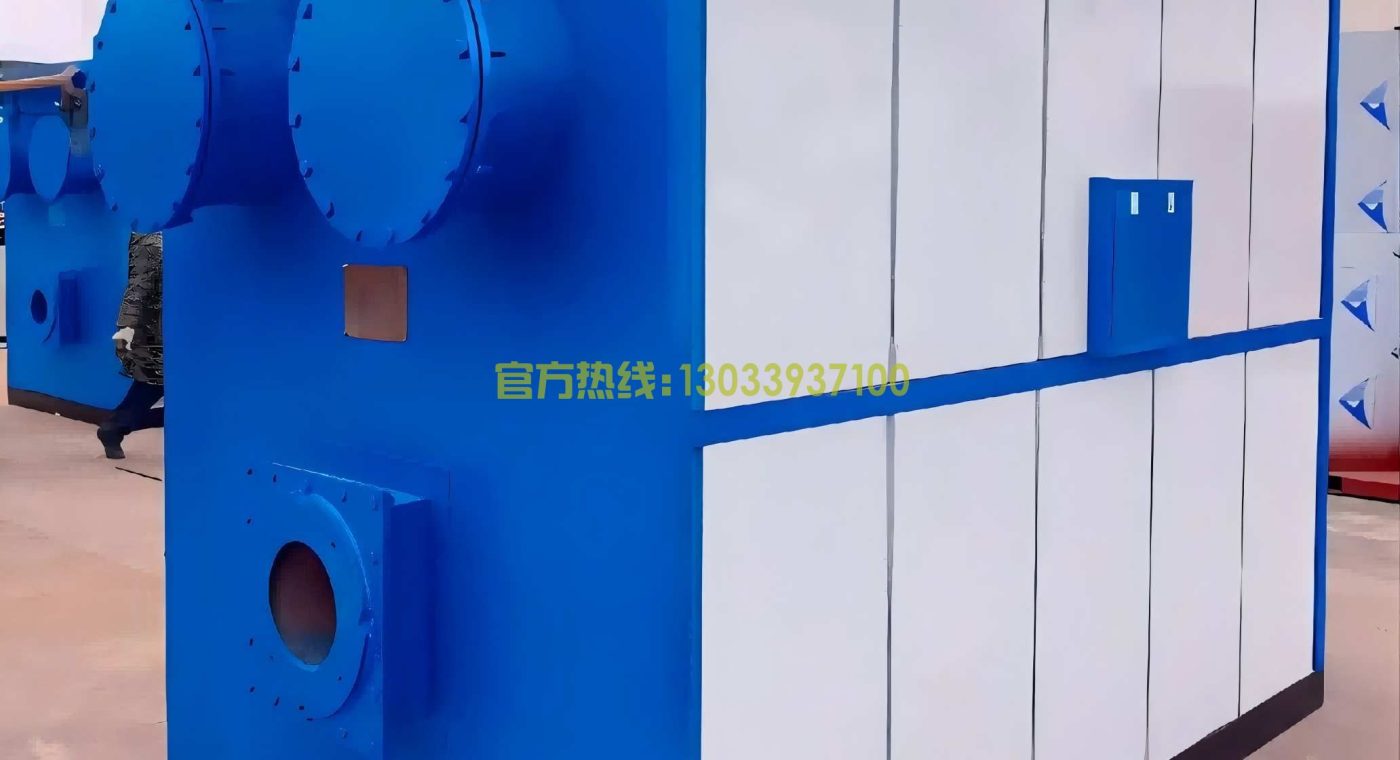
The last barrier, and the one most often left alone
A steam boiler is a pressure vessel with a heat source attached, and the safety valve is the only device that protects it when everything else fails. Level controls, burner management, pressure switches and operators can all fail; the safety valve is designed to open on pressure alone, without power, signal or intervention. That is why its setting, its condition and its test record carry more weight in an inspection than any other accessory on the boiler.
The paradox is that the valve sits closed for years, untouched, and is often the least understood item in the house. A valve that has been isolated behind a shut stop valve, painted over, or set by someone who wanted to stop it simmering is a boiler running without its final protection. Inspection exists to find those conditions before the pressure does.
Set pressure, accumulation and blowdown
The set pressure is the pressure at which the valve begins to open, and it must not exceed the design pressure of the boiler. On a WNS boiler designed for 1.25 MPa, a typical set pressure is 1.25 MPa or slightly below, with the operating pressure at 1.0-1.1 MPa for margin. Setting the valve at the design pressure and running the boiler at the same figure leaves no margin at all, and the valve will weep continuously.
Accumulation is the rise above the set point while the valve discharges at its rated capacity with the burner at maximum output. The usual limit is 10% of set pressure, so a valve set at 1.25 MPa must hold the boiler below 1.375 MPa when fully open. If the valve is undersized the pressure keeps rising; if the design pressure is below that figure, the valve is not protecting the boiler. Valve sizing is therefore a calculation, not a catalogue pick.
Blowdown is the fall in pressure between the point where the valve opens and the point where it reseats, usually 4-7% of set pressure for steam. Too little blowdown and the valve chatters, opening and closing rapidly and damaging the seat; too much and it wastes steam and takes too long to close. Both are adjusted by the valve’s ring settings, which should be set by a competent technician on a test bench, not in the boiler house with a spanner.
Testing: on the bench and on the line
There are two tests and they answer different questions. A bench test, in a workshop with a calibrated pressure source, verifies the set pressure and the blowdown, and it is the only way to adjust the valve. An on-line test, with the boiler at pressure, verifies that the valve actually opens and reseats in service, and it is the only way to find a valve that is stuck, scaled or isolated.
The on-line test raises the pressure slowly, by burner or hand pump, and lets the valve pop. It is noisy, releases a plume of steam, and should be planned with the plant. Where the process cannot tolerate the excursion, a hydraulic lift-assist proves the spindle moves but not that the valve will pass its rated capacity. Skipping the on-line test is acceptable only if the valve is removed and refitted each year with the inlet and outlet confirmed clear.
The findings are usually mundane. The isolation valve below the valve has been shut for two years. The body drain is plugged, so condensate cannot escape. Paint has glued the disc to its seat. The outlet is undersized or capped. The tag pressure no longer matches the boiler because the boiler was uprated. Each is a failure of protection that a five-minute inspection would find.
Pressure switches and the control hierarchy
The safety valve is the last line; the pressure switches are the lines before it. A boiler normally has a high-pressure switch that cuts the burner below the valve setting, a second lockout slightly higher, and a low-pressure switch that starts the burner. The settings should form a ladder: operating band, cut-out, lockout, safety valve. If the cut-out sits at the valve pressure, the valve becomes the operating control, which is exactly what it is not for.
A typical ladder on a 1.25 MPa boiler runs: burner modulates between 0.9 and 1.1 MPa, high-pressure cut-out at 1.15 MPa, lockout at 1.2 MPa, safety valve at 1.25 MPa. The gaps are small but they are what keeps the valve closed in normal operation. Pressure switch calibration should be checked annually against a test gauge, and the switch should be operated at its set point, not merely inspected.
The same hierarchy applies to the low-water cut-out, which protects against a different failure but is tested in the same cycle. An annual inspection that tests the safety valve and ignores the low-water cut-out has protected one failure mode and left the more common one open.
The annual cycle and the records that matter
The cycle is annual in most jurisdictions, with pressure test and internal inspection at intervals set by the boiler’s category and history. The valve is removed, bench tested, adjusted if needed and refitted with a new joint; a spare keeps the boiler in service. Pressure switches, gauges and the low-water cut-out are checked in the same visit.
The records should include the set pressure, the bench test result, the blowdown, the name of the technician, the date, and the next due date. A tag on the valve with the set pressure and the test date is useful, but the register is what an inspector asks for. Photographs of the valve before and after, and of the inlet and outlet, take a minute and settle most arguments.
| Device | Function | Typical check | Acceptance |
|---|---|---|---|
| Safety valve | Final overpressure protection | Annual bench and on-line | Set pressure ±3%, blowdown 4-7% |
| High-pressure cut-out | Stops burner below valve setting | Annual calibration | Operates at set point ±2% |
| High-pressure lockout | Manual reset after trip | Annual, with cut-out | Locks out, requires reset |
| Low-water cut-out | Stops burner on low level | Annual, with evaporation test | Trips before the visible limit |
| Pressure gauge | Operator indication | Annual against test gauge | Within 1.5% of span |
| Steam header relief | Protects the main | Annual visual, 5-year bench | Set below main design pressure |
What to fix before the inspector arrives
The items that turn an inspection into a repair bill are predictable. An outlet pipe that is not self-draining collects condensate and corrodes the body from inside. A spindle installed horizontally may not reseat. A restrictive silencer prevents the valve passing its rated capacity. No spare valve means a lost day for a one-hour bench test.
The design details matter as much as the test. The inlet should be at least the valve size and as short as possible, with no isolation valve unless locked open. The outlet should be full size, self-draining and led to a safe discharge, with no cap that can freeze shut. Mount the valve vertically on the highest point of the shell.
On a YGL thermal oil heater the relief valve protects the oil circuit, not a steam shell, and the same annual discipline applies. The annual cycle is not an administrative ritual. It is the one time in the year when the boiler’s protection is proven rather than assumed. A plant that keeps the register, holds a spare valve, and sets the pressure ladder correctly spends less on repairs and passes inspection without argument. The valve that never opens is the one that must be tested hardest.


