

1-100 t/h (0.7-70 MW)
WNS Gas/Oil Steam Boiler, 1-100 t/h
Packaged three-pass wet-back fire-tube steam boiler for gas and oil, 1-100 t/h at 1.25 MPa, with matched modulating burner and ful...
View detailsA 6 t/h gas steam boiler supplies cooking, bakery and CIP steam at a food factory in Riyadh, with a 50 C ambient derating check and a high-efficiency economizer.
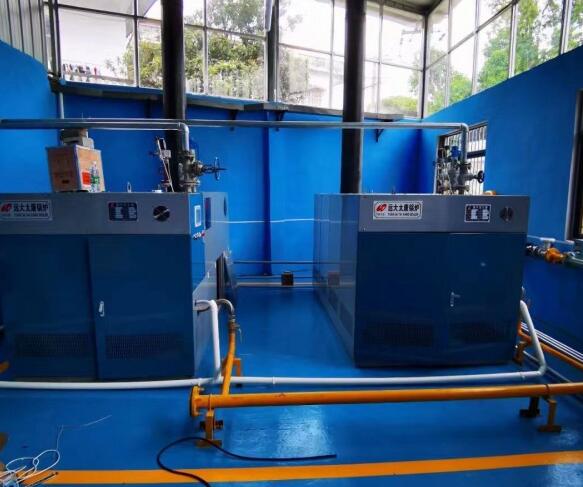
A food factory in Riyadh runs bakery ovens, cooking kettles and a CIP set, and its steam demand is 4-5 t/h through two shifts. The boiler is a 6 t/h WNS unit at 1.0 MPa. The design condition that shaped it was not the steam load but the ambient: 50 °C in summer, with the boiler house at 45 °C even with ventilation.
Hot air is thin air. A burner selected on 20 °C data would be short of oxygen at 50 °C, where air density falls to about 0.82 of its standard value. The burner fan, the combustion air duct and the stack were all sized with that margin, and the burner’s combustion curve was trimmed on site at 45 °C ambient rather than in a test hall.
At 6 t/h and 1.0 MPa the boiler absorbs about 4.2 MW. On natural gas at 34 MJ/Nm3 and 94% efficiency with the economizer, the full-load gas rate is about 455 Nm3/h. The economizer takes the stack to about 135 °C, which is well above the acid dew point for this gas.
| Item | Value |
|---|---|
| Rated evaporation | 6 t/h |
| Pressure | 1.0 MPa |
| Design ambient | 50 °C |
| Full-load gas rate | about 455 Nm3/h |
| Efficiency | about 94% |
| Feedwater | softened, deaerated |
Riyadh’s municipal water is desalinated and low in hardness but high in chloride. The plant uses softened make-up and a stainless feedwater line, and it keeps boiler water TDS at 2,500 ppm. Chloride stress corrosion is the risk in a fire-tube boiler at this pressure, so the plant tests chloride monthly and blows down on conductivity.
Sand is the other local factor. The burner’s air intake has a coarse filter and the boiler house is pressurised with filtered air, because fine sand abrades fan blades and fouls the economizer fins. The plant washes the economizer every six months rather than annually.
In July and August the plant runs at 4.5 t/h with the burner at 80%, and the stack temperature sits about 10 K higher than in winter – normal for the lower air density. The boiler’s controls compensate by trimming excess air, and the plant’s specific gas consumption rises by about 3% in peak summer. That is accepted as a design condition rather than a fault.
The boiler has run two summers without a high-temperature trip. Steam pressure holds at the header within 0.05 MPa through the CIP peak, and the plant has extended its economizer cleaning interval to a year after fitting better intake filtration.
1-100 t/h (0.7-70 MW)
Packaged three-pass wet-back fire-tube steam boiler for gas and oil, 1-100 t/h at 1.25 MPa, with matched modulating burner and ful...
View details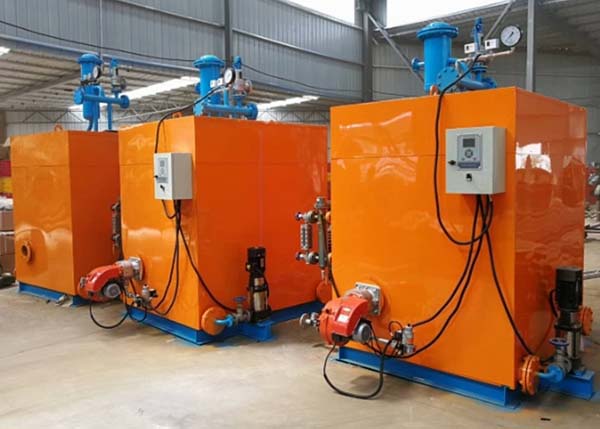
0.1-2 t/h
Multi-pass packaged steam generator, 0.1-2 t/h at 0.4-0.7 MPa, small water content and fast start for pressing, food and sterilizi...
View details
2-50 m³/h treated water
Softener and deaerator package for boiler make-up, holding hardness below 0.03 mmol/L and oxygen below 0.05 mg/L.
View details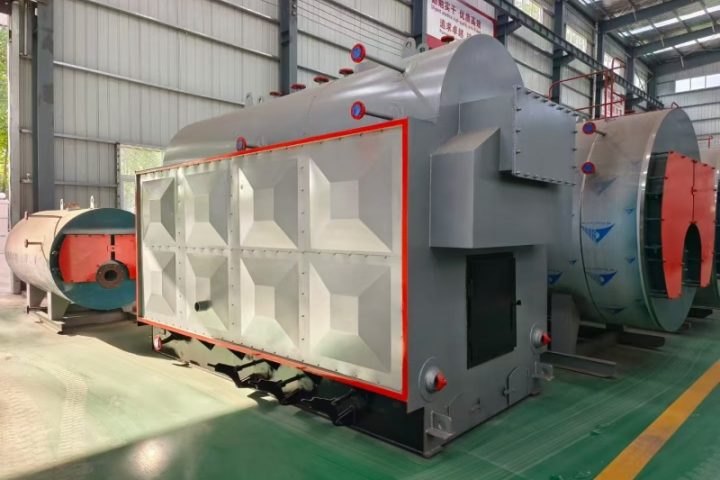
1-20 t/h boiler equivalent
Finned tube economizers and tubular air preheaters for fire-tube, water-tube and thermal oil systems, with cold-end protection aga...
View detailsExternal links open the publisher’s website and are provided for background reading.
Air density falls about 18% against 20 C, so the burner needs more fan pressure and the boiler loses roughly 5-8% of its rated output unless it was selected with margin.
Desalinated water can carry chloride that concentrates under scale and causes stress corrosion cracking. Monthly testing and conductivity blowdown keep it in check.
Yes. The stack is at 200 C without it and about 135 C with it, and the fuel saving does not depend on ambient temperature.
2023
Chonburi, Chonburi Province, Thailand
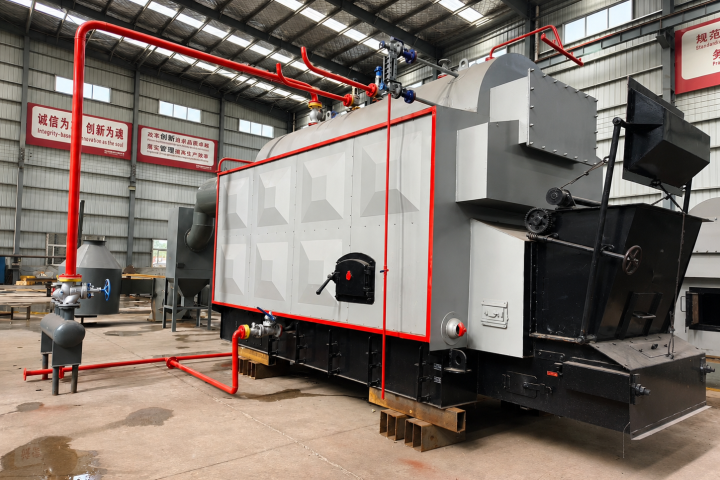
A skid-mounted steam boiler supplied for rubber vulcanization work in Chonburi, Thailand. The packaged arrangement supports stable...
View project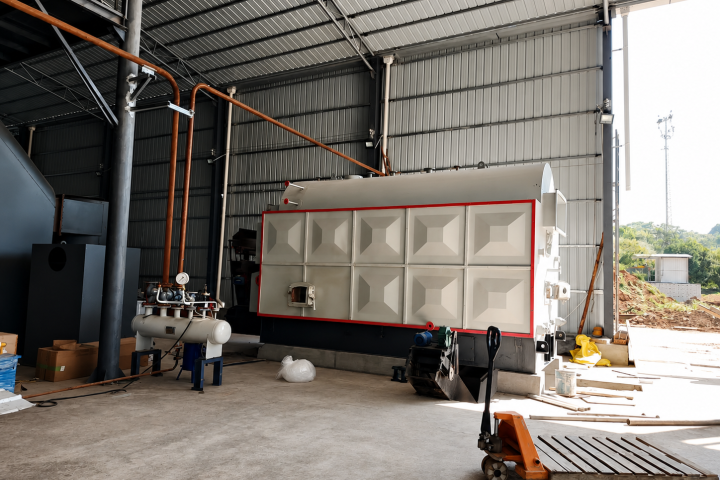
2017
Cairo, Cairo Province, Egypt
A steam boiler was supplied for a textile production plant in Cairo, Egypt. The unit provides process steam for textile operations...
View project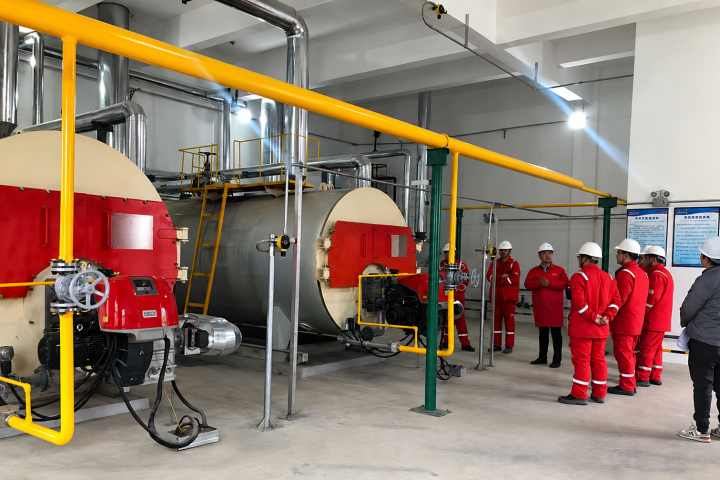
2019
Addis Ababa, Ethiopia
A fuel gas steam boiler was supplied for a mattress sponge production plant in Addis Ababa, Ethiopia, supporting the steam demand...
View projectWe appoint one or two partners per country to quote, deliver and service our boilers locally. Territory protection, factory pricing and commissioning support are part of the agreement.