
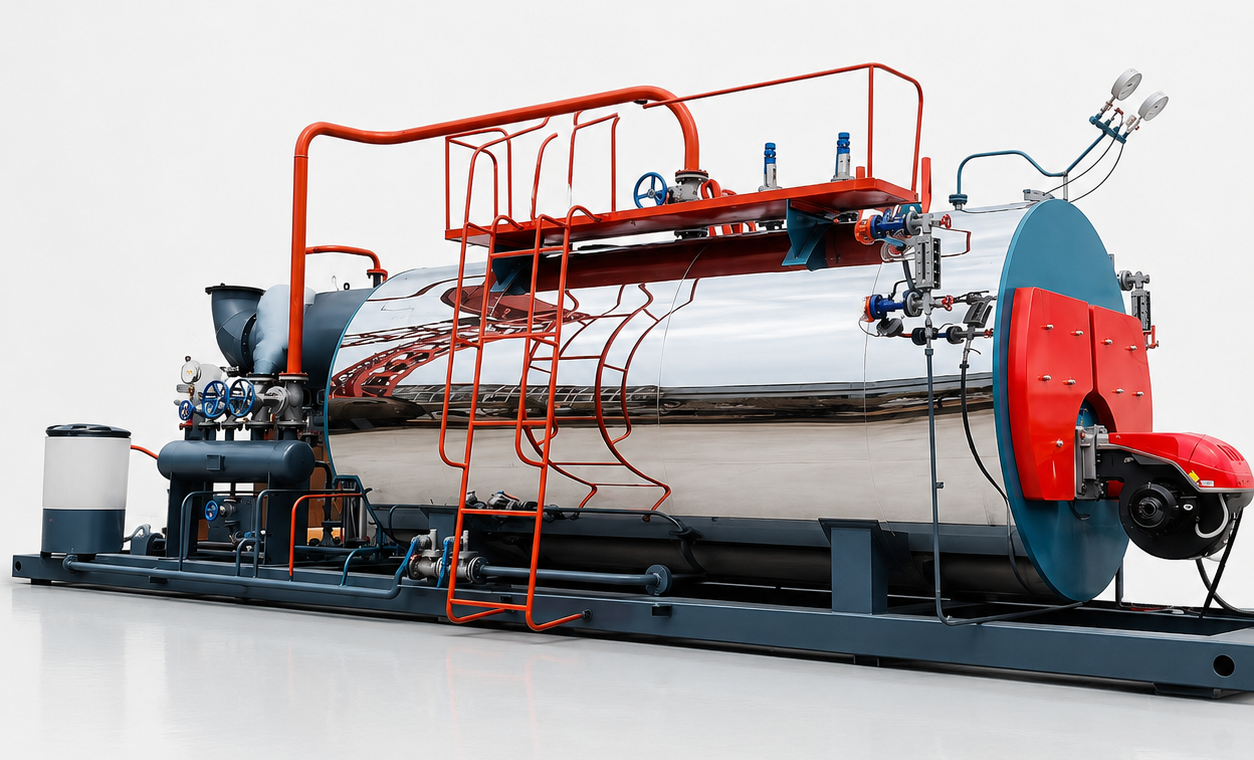
Thermal Oil Heater for Industrial Drying System
Industrial drying is widely used in wood processing, food production, chemical processing, textile finishing, sludge treatment, building materials, printing, coating, and many other industries. In these applications, stable heat supply is essential for product quality, drying efficiency, energy consumption, and production continuity.
A thermal oil heater is one of the most commonly used heat sources for industrial drying systems. Unlike steam boilers, a thermal oil heater uses heat transfer oil as the circulating medium. It can provide high-temperature heat under relatively low operating pressure, which makes it suitable for drying processes that require stable temperature control and continuous operation.
For factories planning to build or upgrade an industrial drying system, choosing the right thermal oil heater is not only about selecting the heating capacity. It also requires careful consideration of drying temperature, heat load, fuel type, circulation system, thermal oil quality, safety protection, energy efficiency, and installation layout.
This article explains how thermal oil heaters are used in industrial drying systems and what factors should be considered before selecting a suitable system.
1. Why Industrial Drying Systems Use Thermal Oil Heaters
Many drying processes require temperatures higher than ordinary hot water systems can provide. Some drying systems may require 160°C, 200°C, 250°C, or even higher operating temperatures. If steam is used for high-temperature drying, the steam pressure may become relatively high, which increases system complexity and pressure equipment requirements.
Thermal oil heating systems can provide high-temperature heat while maintaining relatively low pressure in the circulating system. This is one of the main reasons why thermal oil heaters are widely used in industrial drying.
Common drying applications include:
- Wood drying
- Biomass drying
- Sludge drying
- Chemical powder drying
- Food and agricultural product drying
- Textile drying and setting
- Printing and coating drying
- Rubber and plastic processing
- Paper and board drying
- Mineral and building material drying
For drying equipment such as rotary dryers, belt dryers, box dryers, hot air ovens, coating lines, and drying tunnels, a thermal oil heater can supply heat through heat exchangers, heating coils, hot air units, or jacketed equipment.
2. Main Advantages of Thermal Oil Heating for Drying
A thermal oil heater offers several practical advantages for industrial drying systems.
High Temperature with Low Pressure
Thermal oil can operate at high temperature without requiring the same pressure level as steam. This is useful for factories that need stable high-temperature heat but want to avoid high-pressure steam systems.
Stable Temperature Control
Drying quality is closely related to temperature stability. Thermal oil heating can provide smooth and accurate temperature control, which helps reduce product overheating, uneven drying, and quality fluctuation.
Suitable for Continuous Operation
Many industrial drying lines operate for long hours. Thermal oil systems are suitable for continuous heating and can maintain stable outlet oil temperature when properly designed.
Flexible Heat Transfer
Thermal oil can transfer heat to hot air systems, drying drums, plates, molds, coils, or heat exchangers. This makes it suitable for different drying equipment structures.
Lower Corrosion Risk
Compared with steam and water systems, thermal oil systems do not have the same water-side scaling and corrosion problems. However, thermal oil quality, oxidation, and carbon deposition still need careful control.
3. Common Types of Thermal Oil Heaters
Thermal oil heaters can be selected according to fuel type, capacity, site conditions, and operating cost.
Gas Fired Thermal Oil Heater
Gas fired thermal oil heaters are suitable for factories with natural gas or LPG supply. They offer clean combustion, automatic operation, and relatively low maintenance workload.
They are commonly used in drying systems that require stable heat output, good temperature control, and cleaner boiler room operation.
Oil Fired Thermal Oil Heater
Oil fired thermal oil heaters are suitable for areas where gas supply is unavailable or unstable. Diesel, light oil, or heavy oil can be used depending on the burner and project conditions.
Oil fired systems are often used in industrial areas, remote factories, or projects requiring independent fuel storage.
Biomass Thermal Oil Heater
Biomass thermal oil heaters can use wood chips, sawdust, biomass pellets, palm shells, rice husks, and other biomass fuels. They are suitable for factories with access to low-cost biomass fuel.
For wood drying, biomass drying, or agricultural product drying, biomass thermal oil heaters can be a practical choice. However, they require more space for fuel storage, feeding systems, ash removal, and dust collection.
Electric Thermal Oil Heater
Electric thermal oil heaters are compact, clean, and easy to install. They are suitable for small drying systems, laboratories, pilot lines, or factories with strict emission limits.
The main consideration is electricity cost and available electrical capacity.
4. How to Select Heating Capacity
Heating capacity is one of the most important parameters when selecting a thermal oil heater. It is usually expressed in kW, kcal/h, or MW.
If the heater capacity is too small, the drying system may not reach the required temperature or production capacity. If the capacity is too large, the investment cost may increase and the system may operate inefficiently under low load.
To calculate the required heating capacity, the following information is usually needed:
- Material type
- Initial moisture content
- Final moisture content
- Processing capacity per hour
- Required drying temperature
- Hot air volume
- Inlet and outlet air temperature
- Heat loss of drying equipment
- Working hours per day
- Future production expansion
For example, drying wet biomass, sludge, or high-moisture wood requires much more heat than heating dry materials. The moisture evaporation load is usually the key factor in drying system heat calculation.
A professional supplier should calculate the real heat demand based on drying process data, not only recommend a standard heater model.
5. Confirm the Required Operating Temperature
The operating temperature of the thermal oil system should match the drying process. Different materials require different drying temperatures.
For example:
- Food drying may require relatively moderate and stable temperatures.
- Wood drying often requires controlled heat to avoid cracking or deformation.
- Chemical drying may require strict temperature limits to avoid material decomposition.
- Coating and printing drying may require fast and stable surface drying.
- Sludge drying may require higher heat input and strong heat exchange.
When selecting a thermal oil heater, it is important to confirm:
- Required oil outlet temperature
- Oil return temperature
- Temperature difference between supply and return oil
- Maximum allowable material temperature
- Heat exchanger design temperature
- Thermal oil maximum operating temperature
The thermal oil heater should not be selected only by the highest temperature. The complete system, including oil type, piping, pump, valves, expansion tank, and heat exchanger, must be suitable for the operating temperature.
6. Thermal Oil Selection Is Important
Thermal oil quality directly affects system safety and service life. Different thermal oils have different maximum operating temperatures, oxidation stability, viscosity, and thermal stability.
When selecting thermal oil, the following points should be considered:
- Maximum operating temperature
- Flash point
- Fire point
- Viscosity
- Oxidation resistance
- Thermal stability
- Compatibility with system materials
- Manufacturer recommendations
Thermal oil should not be operated above its recommended temperature range. Overheating may cause oil degradation, carbon formation, lower heat transfer efficiency, and higher safety risks.
Regular oil testing is recommended for systems that operate continuously or at high temperature. If the oil condition becomes poor, it should be replaced or treated according to professional guidance.
7. Circulation Pump and Flow Rate Design
A thermal oil system depends on forced circulation. The circulation pump must provide enough oil flow to transfer heat safely and evenly.
Insufficient oil flow may cause:
- High film temperature
- Local overheating
- Thermal oil degradation
- Carbon deposition
- Heater tube damage
- Unstable drying temperature
When designing the circulation system, the supplier should consider:
- Required heat transfer capacity
- Oil flow rate
- Pump head
- Pipe diameter
- System resistance
- Heat exchanger pressure drop
- Oil viscosity at operating temperature
- Backup pump requirement
For continuous industrial drying systems, it is often recommended to consider one working pump and one standby pump, especially for important production lines.
8. Safety Protection for Thermal Oil Heating Systems
Although thermal oil systems usually operate at lower pressure than steam systems, safety design is still very important. High-temperature oil requires proper protection and control.
A complete thermal oil heater system should include:
- High oil temperature protection
- Low oil flow protection
- Expansion tank
- Oil level control
- Pressure monitoring
- Flame failure protection
- Burner safety control
- Overtemperature alarm
- Emergency shutdown
- Proper venting and drainage
- Fire safety measures
The expansion tank is especially important because thermal oil expands when heated. The system must allow safe expansion and stable operation.
For high-temperature systems, nitrogen sealing may also be considered to reduce oil oxidation, depending on the system design and operating temperature.
9. Heat Exchanger Matching for Drying Systems
In many drying systems, the thermal oil heater does not heat the material directly. Instead, thermal oil transfers heat through a heat exchanger.
Common heat transfer methods include:
- Thermal oil to hot air heat exchanger
- Heating coil inside drying chamber
- Jacketed dryer heating
- Drum dryer heating
- Plate heat exchanger
- Finned tube heat exchanger
- Radiator-type air heater
The heat exchanger must be designed according to hot air volume, temperature rise, oil temperature, oil flow rate, and pressure drop. If the heat exchanger is too small, the drying system may not reach the required air temperature. If the air-side resistance is too high, the fan performance may be affected.
For hot air drying systems, the heater, heat exchanger, fan, duct, and dryer body should be designed as one complete system.
10. Energy Efficiency and Heat Recovery
Energy consumption is a major cost in industrial drying. A thermal oil heater can be combined with energy-saving measures to improve overall efficiency.
Possible energy-saving methods include:
- High-efficiency burner
- Air preheater
- Waste heat recovery
- Proper insulation of oil pipes
- Insulated drying chamber
- Automatic temperature control
- Variable frequency fans
- Exhaust air heat recovery
- Regular cleaning of heat exchangers
- Stable material feeding
For fuel-fired thermal oil heaters, flue gas heat recovery can help improve efficiency. For drying systems with high exhaust air temperature, exhaust heat recovery may also be considered.
However, heat recovery should be evaluated based on real operating conditions. The goal is to reduce actual fuel consumption, not only to improve theoretical efficiency.
11. Installation and Boiler Room Layout
Before selecting a thermal oil heater, the factory should confirm available installation space and site conditions.
Important layout points include:
- Heater foundation size
- Burner maintenance space
- Circulation pump location
- Expansion tank position
- Oil storage and filling area
- Heat exchanger position
- Pipe routing
- Chimney position
- Ventilation conditions
- Fire safety distance
- Electrical cabinet location
- Maintenance clearance
For oil-fired systems, fuel tank and oil supply systems must be considered. For gas-fired systems, gas pressure, gas flow rate, and safety shut-off devices should be confirmed. For biomass systems, fuel storage, conveyor, ash removal, and dust collection equipment require more space.
A good layout makes installation, operation, inspection, and maintenance much easier.
12. How to Choose a Reliable Thermal Oil Heater Supplier
A thermal oil heater project is not only about the heater body. It is a complete heating system that includes heater selection, thermal oil circulation, heat exchanger matching, safety control, piping design, and installation support.
A reliable supplier should be able to provide:
- Heat load calculation
- Heater model selection
- Fuel consumption estimation
- Thermal oil system design
- Circulation pump matching
- Expansion tank design
- Heat exchanger selection
- Control system configuration
- Boiler room layout suggestions
- Technical drawings
- Installation guidance
- Operation training
- Spare parts support
- After-sales service
For overseas projects, the supplier should also consider voltage, fuel conditions, shipping, packaging, local standards, and documentation requirements.
Choosing an experienced manufacturer can help reduce project risk and improve long-term system reliability.
Conclusion
A thermal oil heater is a reliable and practical heat source for industrial drying systems. It can provide stable high-temperature heat under relatively low pressure, making it suitable for wood drying, biomass drying, chemical drying, food drying, textile drying, coating lines, and many other applications.
When selecting a thermal oil heater, the factory should consider heating capacity, operating temperature, fuel type, thermal oil quality, circulation flow, heat exchanger matching, safety protection, energy efficiency, and installation layout.
A well-designed thermal oil heating system can help improve drying efficiency, reduce energy consumption, maintain stable product quality, and support continuous production.
For an industrial drying project, it is recommended to provide material type, moisture content, processing capacity, required drying temperature, hot air volume, fuel type, installation space, and working hours. With this information, a professional thermal oil heater manufacturer can design a more suitable heating solution.
FAQ
1. Why is a thermal oil heater used in industrial drying systems?
A thermal oil heater can provide stable high-temperature heat under relatively low pressure. It is suitable for drying systems that require accurate temperature control and continuous operation.
2. What industries commonly use thermal oil heaters for drying?
Thermal oil heaters are commonly used in wood processing, biomass drying, food processing, chemical processing, textile finishing, printing, coating, sludge drying, and building material industries.
3. What temperature can a thermal oil heater provide?
The operating temperature depends on the heater design and thermal oil type. Many industrial thermal oil systems operate around 160°C to 300°C, while higher temperatures may require special oil and system design.
4. What fuel can be used for a thermal oil heater?
Common fuel options include natural gas, LPG, diesel, light oil, heavy oil, biomass fuel, and electricity. The best choice depends on local fuel availability, operating cost, emissions, and site conditions.
5. What information is needed before selecting a thermal oil heater?
Key information includes material type, moisture content, processing capacity, required drying temperature, hot air volume, fuel type, working hours, installation space, and local safety or emission requirements.


