

6-100 t/h
SZS Water-Tube Gas/Oil Steam Boiler, 6-100 t/h
Membrane-wall water-tube steam boiler with staged combustion and FGR, 6-100 t/h at up to 2.5 MPa and 98% efficiency with heat reco...
View detailsBatch dyeing steam, stenter heat and cylinder drying in one plant: coincidence factors, a 3.4 MW peak calculation and thermal oil design limits.
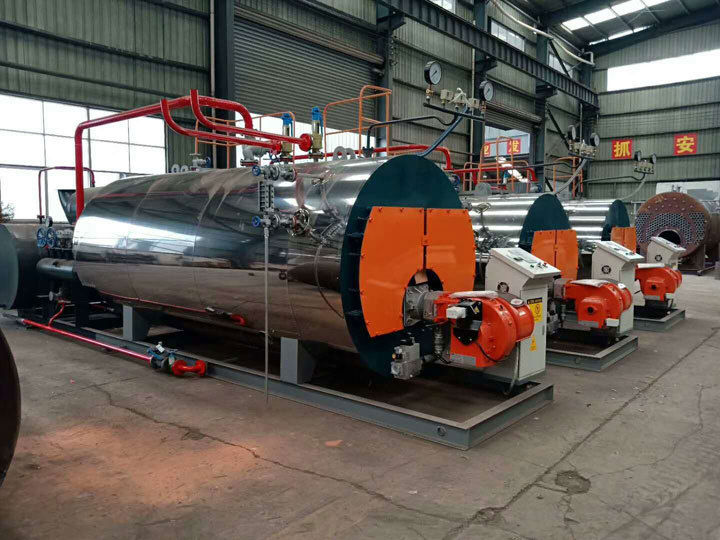
A dyehouse buys heat in two different forms, and they rarely come from the same unit. Jet and package dyeing machines consume steam in batches: a machine fills, heats a liquor volume to 130 °C, holds, cools and drains, then repeats. Stenters and curing ovens consume heat continuously at 180-220 °C, which saturated steam cannot reach at any sensible pressure. Between them sit the cylinder dryers, running at a steady 0.4-0.6 MPa, and the printing steamer at 0.2 MPa.
The batch load sets the boiler size and is deceptive. Ten dyeing machines rarely heat up together, but six do when a shift starts and the plan pushes one shade family through in parallel. A boiler sized on the sum of all ten is oversized by 60%; one sized on the daily average collapses at the first colour change.
The stenter load is easier to calculate because it is continuous, and it is the load most often left out of the enquiry. Where a mill has no gas grid, or the stenter exhaust is used for heat recovery, a thermal oil heater is the practical answer and belongs in the same plant room.
The steam side is a packaged fire-tube boiler from 4 to 20 t/h at 1.0 MPa, with a matched low-NOx burner, softener and, above 4 t/h, a deaerator. Jet dyeing machines are the most sensitive users: they need 0.4-0.6 MPa at the machine inlet and a stable pressure during the heat-up ramp, because a falling header pressure lengthens the cycle and causes shade variation between batches.
The thermal oil side is a horizontal coil heater of 350-5,800 kW, with a circulating pump set, an expansion tank and a nitrogen blanket on the tank if the oil is expected to last. Thermal oil is chosen for stenters because it delivers 280-300 °C at atmospheric pressure, so the plant avoids a high-pressure steam system for one or two users.
Water treatment matters here: textile water is often hard and high in chloride, and dyehouse condensate carries dye, salt and caustic. Only dryer and heat exchanger condensate returns to the hotwell.
| Parameter | Value | Note |
|---|---|---|
| Steam capacity | 8 t/h at 1.0 MPa | 179.9 °C saturated |
| Peak steam demand | 7.5 t/h | six machines in heat-up |
| Thermal oil capacity | 2,000 kW | two stenters |
| Oil supply / return | 280 / 260 °C | film temperature below 320 °C |
| Oil working pressure | 0.6 MPa | pump head only |
| Condensate return | 35% at 85 °C | dryer section only |
| Fuel | Natural gas, 35.6 MJ/Nm³ | LHV basis |
Each jet machine holds 3,000 litres of liquor. Heating from 30 °C to 130 °C takes 3,000 kg × 4.19 kJ/kgK × 100 K = 1.257 GJ. Add 8% for vessel mass and standing losses, and the batch needs 1.36 GJ. Spread over a 40-minute heat-up (2,400 s), that is 566 kW per machine. Six machines ramping together give 3.4 MW.
The rest of the steam load is continuous: cylinder dryers 1.1 MW, hot water for washing 0.35 MW. Total 4.85 MW, which at 2,338 kJ per kilogramme of steam (1.0 MPa, 105 °C feed) is 7,466 kg/h — 7.5 t/h, so an 8 t/h boiler with 7% margin.
On the oil side, a five-chamber stenter evaporating 1,100 kg of water per hour needs 1,100 × 2,257 kJ/kg = 2.48 GJ/h, or 690 kW of latent heat. Fabric heating, fresh-air make-up and casing losses add about 35%, so each stenter draws roughly 930 kW and the pair draws 1.9 MW. A 2,000 kW heater covers both with 5% spare.
Check the oil flow: at 2,000 kW, a 20 K drop and a specific heat of 2.2 kJ/kgK, the circulation is 2,000 / (2.2 × 20) = 45 kg/s, about 190 m³/h at 850 kg/m³. That flow must be available before the burner fires and must be proven by a flow switch, not by pump status.
On the steam side the levers are familiar: an economiser worth 3-4 points, 3% O2 instead of 6%, and blowdown kept near 3% by good softener control. Each point is worth about 21,000 Nm³ a year at 4,500 hours, so the economiser pays back quickly.
On the oil side the largest loss is usually not the heater but the distribution. Uninsulated oil lines, a leaking flange and an over-temperature bypass all raise return temperature and force the burner to make up heat that was already paid for. The second largest is film temperature: running the heater at low flow to hold a high supply temperature cokes the oil on the coil wall, and the coke layer costs efficiency permanently. Minimum flow protection and a 20-30 K design drop are the defence.
Both circuits normally fall under one site permit. NOx at 30 mg/Nm³ is achievable on gas with flue-gas recirculation; 60-80 mg/Nm³ is typical without it. Stenter exhaust is separate: it carries oil mist and condensed volatiles, and many districts require treatment regardless of what the boiler emits.
Thermal oil systems add a compliance point of their own. The oil is a hazardous material when hot, the expansion tank must be vented safely, and the heater needs a high-temperature cut-out independent of the control loop. A leak into a stenter duct is a fire risk, so the coil and its flanges should be inside a bunded area with detection.
With those figures we can size both circuits and check the coincidence assumption against your shift pattern.
6-100 t/h
Membrane-wall water-tube steam boiler with staged combustion and FGR, 6-100 t/h at up to 2.5 MPa and 98% efficiency with heat reco...
View details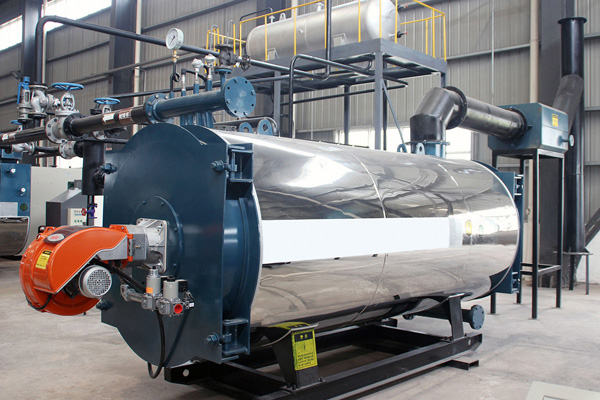
120-5,800 kW
Horizontal liquid-phase thermal oil heater, 120-5,800 kW, disc coil heating surface, 300-340 C at 0.8-1.0 MPa working pressure.
View details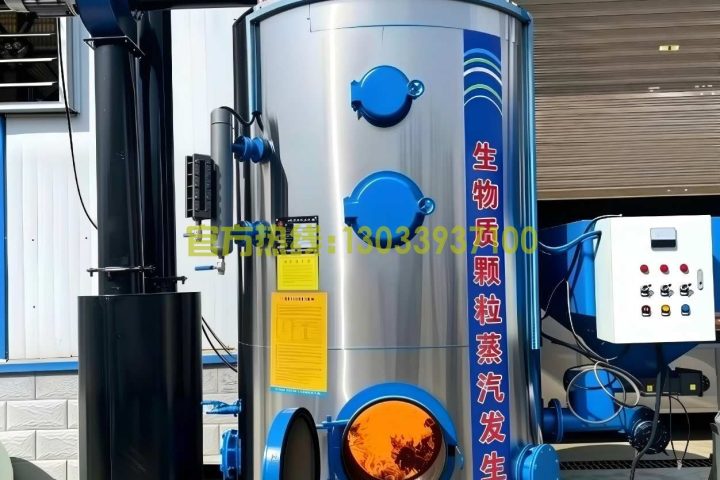
10-50 t/h feedwater
Tray-type thermal deaerator, 10-50 t/h, removing oxygen to below 15 ppb and heating feedwater to 104-105 °C before it reaches the...
View detailsExternal links open the publisher’s website and are provided for background reading.
Stenters dry at 180-220 °C air temperature. Saturated steam at a workable pressure cannot reach that, and high-pressure superheated steam would need a pressure system far beyond what one user justifies. Thermal oil delivers 280-300 °C at close to atmospheric pressure, so the heater stays simple.
Between half and two thirds of the installed machines, depending on how the dye plan is batched. Six out of ten is a common design figure. Ask the dyehouse manager how many machines can be in heat-up at the same time at shift start; that number, not the installed count, sizes the boiler.
The liquor runs at 130 °C under its own pump pressure, and the heat exchanger needs a useful approach temperature, so 0.4-0.6 MPa at the machine inlet is usual. Allow for the control valve drop and the main loss when setting the boiler pressure.
Only from the clean users: cylinder dryers, heat exchangers and hot water sets. Condensate from dyeing and washing carries dye, salt and caustic and belongs in effluent treatment. Returning contaminated condensate raises blowdown and can foam the boiler.
Industry solution
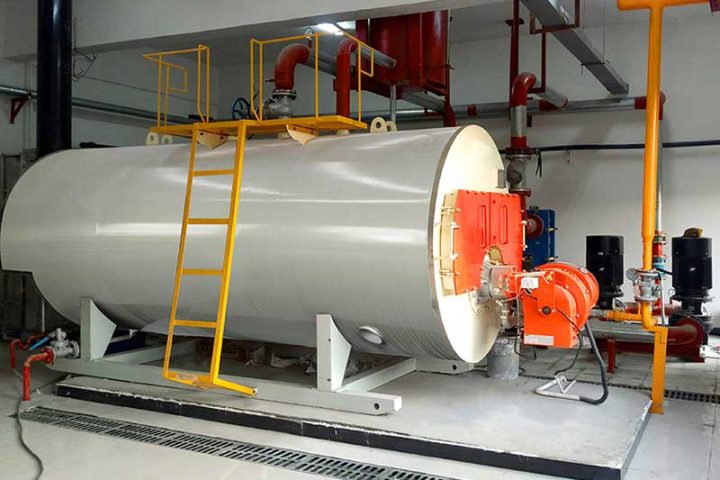
Matching steam pressure and thermal oil to reactor, reboiler and dryer duty, with a worked 6 t/h distillation and evaporation exam...
View details
Industry solution
Sterilisation steam quality, laundry peaks and 60 °C hot water with Legionella control, sized on a 300-bed worked example.
View details
Industry solution
Sizing steam plant for pasteurisers, retorts, CIP and kettles, with a worked 6 t/h example, accumulator logic and fuel-saving leve...
View detailsWe appoint one or two partners per country to quote, deliver and service our boilers locally. Territory protection, factory pricing and commissioning support are part of the agreement.