
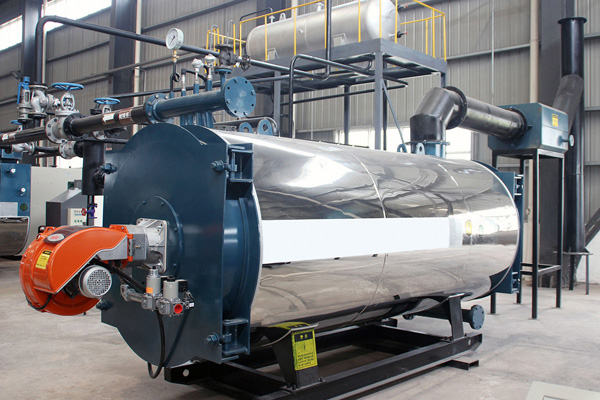
120-5,800 kW
YY(Q)W Gas/Oil Thermal Oil Heater, to 340 C
Horizontal liquid-phase thermal oil heater, 120-5,800 kW, disc coil heating surface, 300-340 C at 0.8-1.0 MPa working pressure.
View detailsPackaged WNS gas-fired steam boiler for brewery and beverage plants. Covers wort boiling, CIP, pasteurization and bottle washing duties at 1-10 t/h, 0.7-1.0 MPa, with food-grade steam provisions for direct injection.
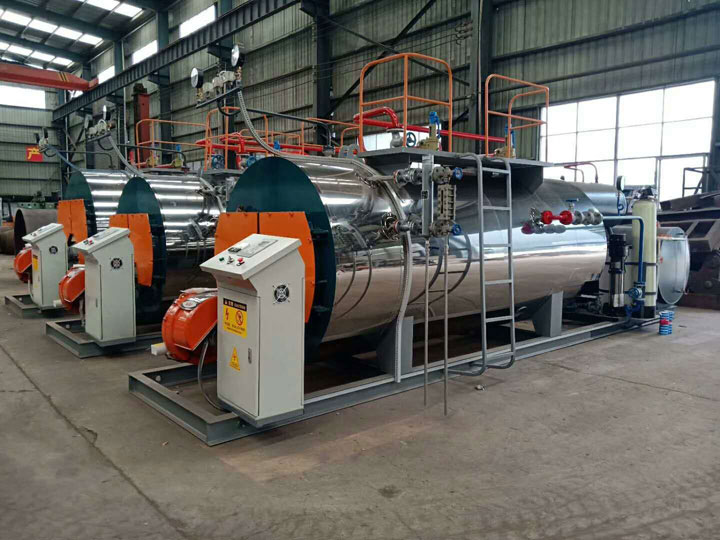
Brewery and beverage plants use steam across several distinct duties: wort boiling, clean-in-place (CIP) heating, pasteurization, and bottle washing. Each duty places different demands on the steam system, and the boiler package must serve all of them from a single steam header.
Wort boiling requires a steady, controllable heat input over the boil duration. CIP depends on hot water and cleaning solution held at temperature, with sharp peaks when circuits are brought up to setpoint. Pasteurization needs stable temperature control to hold the required process temperature. Bottle washing draws steam for sustained heating of wash baths. The recommended equipment for this application is the WNS gas steam boiler, a packaged fire-tube unit matched to these combined loads.
The capacity range for this application is 1-10 t/h at 0.7-1.0 MPa. Sizing should be based on the combined simultaneous demand of the process duties, not on any single duty in isolation. Wort boiling and pasteurization typically present as sustained loads, while CIP introduces sharp peaks as heating circuits start and cleaning solutions are raised to temperature.
Because CIP peaks can be brief and high, the boiler should be sized with margin above the average load, and the steam header and feedwater system should be reviewed for peak draw. Where peaks are frequent, the sizing calculation should account for the recovery time between them. The 0.7-1.0 MPa pressure band covers the temperature requirements of these duties and provides headroom for distribution losses.
The WNS boiler is gas-fired. Fuel selection should be confirmed against the site’s available gas supply and the required burner turndown for the load profile described above. A burner with adequate turndown helps the boiler follow the difference between low overnight demand and peak CIP and production loads without excessive cycling.
Efficiency should be evaluated at the expected operating points rather than at a single rating condition. Because brewery loads vary through the day, part-load performance matters as much as full-load performance. Heat recovery from flue gas and appropriate insulation of the steam and condensate system should be considered as part of the package to reduce fuel consumption.
Steam used for direct injection into product must be food-grade. This is an engineering requirement for the steam system, not only for the boiler: the steam path, including any treatment chemicals, must be compatible with direct contact with beverage product. Where direct injection is used, the steam should be generated from suitably treated water and carried through a clean steam path.
Feedwater and boiler water treatment must be specified for the site’s raw water analysis. The treatment scope should address hardness, alkalinity, dissolved solids and oxygen, with blowdown and control arrangements matched to the chosen treatment. Steam quality for indirect duties such as pasteurization and bottle washing should be defined in the specification, and condensate return quality should be monitored where condensate is recovered.
The boiler package should include combustion controls, flame safeguard, pressure and level protection, and a burner management system appropriate to the unit. Controls should support the load-following behaviour described above, with the ability to respond to CIP peaks and to run efficiently at low demand.
Safety devices should be specified for the pressure and temperature range of the application, with alarms and interlocks for low water level, high pressure and flame failure. The control system should provide the records needed for plant operation, and the interface with the plant’s steam header and feedwater system should be defined in the scope.
To prepare a proposal, send the required steam capacity and pressure, the list of duties and their simultaneous demand, the expected CIP peak magnitude and duration, the gas supply details, the raw water analysis, and the steam quality requirement for each duty, including whether direct injection is used. Also state the preferred control interface and the site conditions relevant to installation. With these inputs, the WNS boiler package can be configured and sized for the plant.
The recommended range is 1-10 t/h at 0.7-1.0 MPa. Final sizing should be based on the combined simultaneous demand of wort boiling, CIP, pasteurization and bottle washing, with margin for CIP peaks.
Steam for direct injection must be food-grade. This requires suitably treated feedwater and a clean steam path, and the steam quality requirement should be stated for each duty in the specification.
CIP introduces sharp peaks as circuits are heated. The boiler should be sized with margin above average load, and the steam header and feedwater system should be reviewed for peak draw and recovery time between peaks.
| Typical capacity | 1-10 t/h |
|---|---|
| Pressure/temperature | 0.7-1.0 MPa saturated steam |
| Fuel options | Gas-fired (WNS) |
| Efficiency | Evaluated at expected operating points; heat recovery optional |
| Steam quality | Food-grade steam for direct injection; defined per duty |
| Controls | Combustion controls, flame safeguard, pressure and level protection |
| Water treatment | Specified from site raw water analysis |
| Scope of supply | Packaged boiler, burner, controls, safety devices; treatment and heat recovery as configured |
| Typical duties | Wort boiling, CIP, pasteurization, bottle washing |
| Load consideration | Sized for combined demand with CIP peak margin |
120-5,800 kW
Horizontal liquid-phase thermal oil heater, 120-5,800 kW, disc coil heating surface, 300-340 C at 0.8-1.0 MPa working pressure.
View details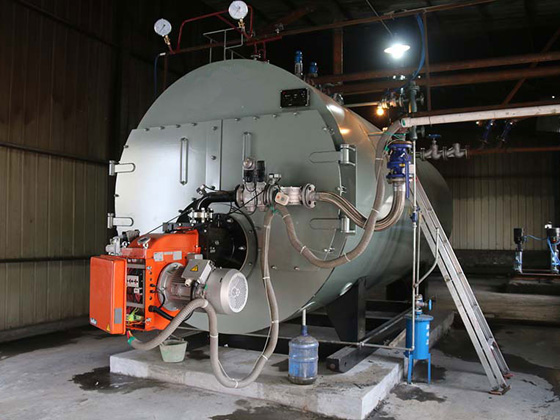
0.35-14 MW
Closed-loop pressurized hot water boiler for 95/70 and 115/70 systems, 0.35-14 MW, three-pass wet-back shell with modulating burne...
View details
3 t/h
The WNS3-1.25-Q is a packaged three-pass wet-back fire-tube steam boiler rated at 3 t/h and 1.25 MPa, producing 194 °C steam on na...
View detailsExternal links open the publisher’s website and are provided for background reading.
Include the capacity (t/h or MW), fuel, working pressure and site country so the proposal matches your permit limits.
We appoint one or two partners per country to quote, deliver and service our boilers locally. Territory protection, factory pricing and commissioning support are part of the agreement.