
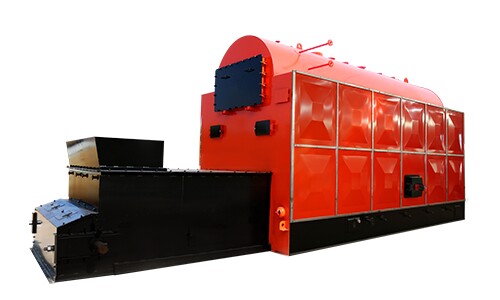
When selecting a new industrial boiler, the choice between diesel and natural gas often comes down to infrastructure. While gas is typically cheaper per unit of energy and cleaner burning, diesel still makes sense in many scenarios: off-grid sites, temporary installations, or where gas pipeline capacity is unavailable. This article breaks down the engineering and economic factors—fuel handling, tank farm requirements, emissions, and cost per tonne of steam—to help you evaluate if diesel is the right fit for your project.
Fuel Handling and Storage: Diesel vs Gas
Natural gas is delivered via pipeline, requiring a metering station, pressure reduction, and safety shut-off systems. Diesel, on the other hand, needs on-site storage and handling. A typical diesel system includes a storage tank (sized for 7–30 days of operation), transfer pumps, filters, and a day tank near the boiler. Fuel oil must be kept above its pour point (typically 5–10°C for light diesel) and free of water and sediment. Regular testing and polishing are necessary to avoid burner fouling.
Gas systems are simpler in operation but depend on a reliable pipeline. For sites without gas access, diesel offers energy independence. However, the tank farm footprint can be significant: a 5 MW boiler running continuously for 30 days requires about 360 m³ of diesel (assuming 85% efficiency and 42.7 MJ/kg LHV). This translates to a tank diameter of about 8 m and height of 7.5 m, plus bunding for spill containment.
Emissions Comparison
Natural gas is predominantly methane and burns with lower CO₂, NOx, and particulate emissions than diesel. Diesel contains sulfur (typically 10–50 ppm for low-sulfur grades) and heavier hydrocarbons, leading to higher SO₂ and PM emissions. Modern low-NOx diesel burners can achieve NOx levels of around 80–120 mg/Nm³ (at 3% O₂), while gas burners can reach 30–50 mg/Nm³. For projects in air quality management areas, diesel may require selective catalytic reduction (SCR) or flue gas desulfurization, adding cost and complexity.
However, diesel’s higher CO₂ footprint (about 74 kg CO₂/GJ vs 56 kg CO₂/GJ for natural gas) can be mitigated by using biodiesel blends or renewable diesel (HVO), though these fuels come at a premium and may require burner adjustments.
Cost per Tonne of Steam: Key Drivers
Fuel cost dominates the operating expense. To compare, we calculate the cost per tonne of steam for a 10 bar(g) saturated steam boiler with 90% thermal efficiency. The table below shows typical fuel consumption and relative cost at assumed fuel prices (for illustration only; actual prices vary by region and contract).
| Parameter | Diesel | Natural Gas |
|---|---|---|
| LHV (MJ/kg or MJ/Nm³) | 42.7 | 35.8 |
| Fuel per tonne steam (kg or Nm³) | ~85 kg | ~101 Nm³ |
| Assumed fuel price (per unit) | $1.0/kg | $0.4/Nm³ |
| Fuel cost per tonne steam | $85 | $40 |
| Maintenance & handling adder | +10–15% | +2–5% |
Assumptions: boiler efficiency 90% (LHV basis), feedwater at 105°C, steam at 10 bar(g). Diesel price includes delivery and tank farm operation; gas price excludes pipeline capacity charges. The table shows that diesel fuel cost is roughly double that of gas at these assumed prices, but actual differentials depend on local markets.
Capital costs also differ: diesel systems require storage tanks, pumps, and spill containment, adding 20–30% to the boiler island cost. Gas systems need a pressure reduction station and piping, but these are often simpler. For a 10 t/h boiler, the total installed cost of a diesel system might be 1.2–1.5 times that of a gas system, excluding fuel.
When Diesel Still Makes Sense
Diesel remains a viable choice in several scenarios:
- No gas infrastructure: Sites beyond the gas grid or where connection costs are prohibitive.
- Temporary or mobile plants: Construction sites, remote mining, or short-term projects where pipeline installation is impractical.
- Fuel flexibility: Dual-fuel boilers can switch between gas and diesel, providing security of supply.
- Peak shaving: Diesel boilers can supplement gas during periods of curtailment or high demand.
- Stringent emission limits with low-sulfur fuel: In some regions, ultra-low-sulfur diesel with SCR can meet strict NOx limits.
Checklist: Evaluating Diesel vs Gas
- Confirm gas availability and connection cost; compare with diesel tank farm footprint.
- Assess fuel price volatility and contract terms for both fuels.
- Review local emissions regulations for NOx, SO₂, and particulates.
- Calculate annual steam demand and fuel consumption to size storage.
- Evaluate maintenance requirements: diesel needs filters, water separation, and burner cleaning.
- Consider future fuel switching or blending (e.g., biodiesel, HVO).
- Check insurance and fire safety requirements for fuel storage.
What to Send Us for a Proposal
To prepare a tailored proposal, please provide:
- Required steam capacity (t/h) and operating pressure (bar).
- Annual steam demand profile and load fluctuations.
- Site location and available fuel infrastructure (gas pipeline pressure, diesel delivery access).
- Emissions limits and any local air quality requirements.
- Space constraints for boiler house and tank farm.
- Preferred fuel type or dual-fuel requirement.
- Any future expansion plans.
Our engineering team can help you compare options and select the right boiler. Explore our product range for diesel and gas fired boilers, and refer to our capacity and cost guide for sizing assistance.


