
Thin air, cold air, hot air
6 t/h at 1.0 MPa is the working point for a food plant in Riyadh, Saudi Arabia, where summer ambient reaches 50 °C and the boiler house is at 45 °C. The unit was selected on that operating pattern rather than on a catalogue rating, and the difference shows in how it holds pressure on the worst shift of the week.
Burners are rated on a standard air density, and sites that depart from it lose capacity. At 2,000 m the air is about 20% thinner, so a burner selected at sea level delivers roughly 80% of its firing rate unless the fan is upsized. Heat is the other direction: at 45-50 °C ambient the air is also thin, and the fan and combustion head need margin that a catalogue selection does not include.
Numbers that decide the design
At 6 t/h and 1.0 MPa the unit absorbs about 4.3 MW. On natural gas at roughly 94% efficiency, full-load demand is about 465 Nm3/h. The figures are stated at the site’s conditions, because ambient temperature, altitude and fuel analysis all move them.
| Item | Value |
|---|---|
| Rated output | 6 t/h |
| Pressure / temperature | 1.0 MPa |
| Fuel | natural gas |
| Full-load fuel demand | 465 Nm3/h |
| Thermal efficiency | about 94% |
What to watch on site
The fix is in the selection, not in the control panel: size the fan for the site pressure and temperature, state the rating at site conditions, and trim the combustion curve on site with an analyser. Cold climates add a different set of problems, from frozen air ducts to condensate in the stack, and those are solved with insulation, heat tracing and drain points.
Site note: summer ambient reaches 50 °C and the boiler house is at 45 °C. The operators log header pressure and stack temperature every two hours, which is enough to see fouling and load drift before either becomes a shutdown.
Why it matters
Thin air, cold air, hot air is not a detail to settle after the order. It decides the shell size, the burner, the feedwater train and the maintenance calendar, and it is cheaper to get right in the specification than in the boiler house.
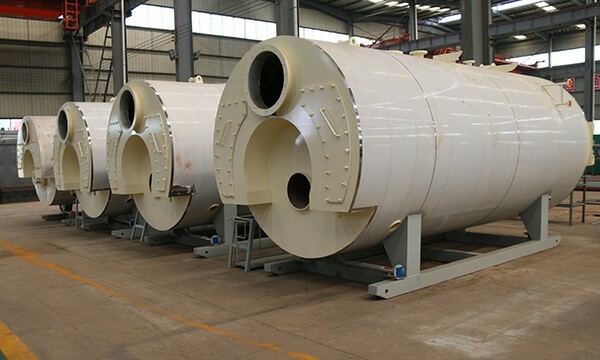
Equipment used in this kind of plant: wns gas steam boiler and economizer. The industry side is covered in this solution page, and project cases show comparable installations.
Background reading: external reference on steam and process heat.
Questions plant engineers ask
How much capacity is lost at 2,000 m?
About 15-20% on a standard burner. Upsizing the fan and the combustion air path restores most of it.
Does hot ambient air affect efficiency?
It reduces the mass of oxygen per fan revolution, so the burner works harder and efficiency drops slightly. The effect is larger at high firing rates.
Related note: 8 t/h Gas steam boiler in Turkey: Where the fuel actually goes


