
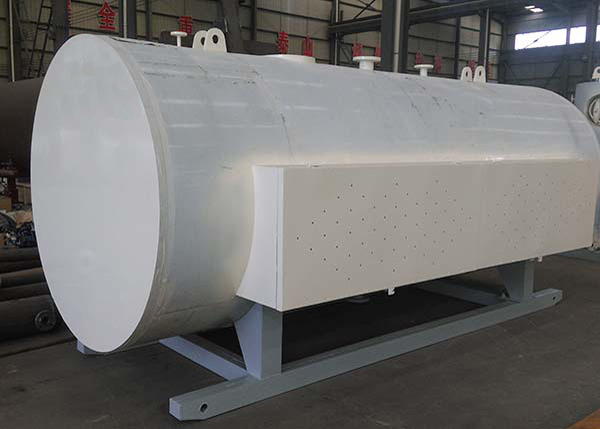
Electric boilers: clean, quiet, and limited by the supply
1 t/h at 1.0 MPa is the working point for a food plant in Makassar, Indonesia, where the plant has a 2 MVA transformer and a weak feeder at the end of the line. The unit was selected on that operating pattern rather than on a catalogue rating, and the difference shows in how it holds pressure on the worst shift of the week.
An electric boiler converts about 98% of its input to heat, has no flue, no fuel line and no stack, and starts in minutes. The constraint is the electrical supply: 1 t/h of steam needs roughly 750 kW, so a 4 t/h unit is a 3 MW load, and the transformer, cabling and demand charge usually cost more than the boiler. Sites with a weak supply often need a dedicated transformer and a soft-start arrangement.
Numbers that decide the design
At 1 t/h and 1.0 MPa the unit absorbs about 0.7 MW. On electricity at roughly 98% efficiency, full-load demand is about 735 kW. The figures are stated at the site’s conditions, because ambient temperature, altitude and fuel analysis all move them.
| Item | Value |
|---|---|
| Rated output | 1 t/h |
| Pressure / temperature | 1.0 MPa |
| Fuel | electricity |
| Full-load fuel demand | 735 kW |
| Thermal efficiency | about 98% |
What to watch on site
Electric units make most sense where steam demand is small, intermittent or must be clean, such as laboratories, food plants and hospitals in cities with strict air-quality rules. Where electricity is cheap at night, a thermal store can move the load off peak. Where it is not, the running cost is usually two to three times a gas boiler’s.
Site note: the plant has a 2 MVA transformer and a weak feeder at the end of the line. The operators log header pressure and stack temperature every two hours, which is enough to see fouling and load drift before either becomes a shutdown.
Why it matters
Electric boilers: clean, quiet, and limited by the supply is not a detail to settle after the order. It decides the shell size, the burner, the feedwater train and the maintenance calendar, and it is cheaper to get right in the specification than in the boiler house.
Equipment used in this kind of plant: wdr electric steam boiler and steam accumulator. The industry side is covered in this solution page, and project cases show comparable installations.
Background reading: external reference on steam and process heat.
Questions plant engineers ask
How much power does 1 t/h of steam need?
About 750 kW at 98% efficiency, plus feedwater pumping. A 2 t/h unit is a 1.5 MW load.
When is an electric boiler economical?
For small or intermittent loads, clean-steam requirements, or where off-peak electricity is cheap. Continuous process steam is usually cheaper from gas.
Related note: 2.8 MW Gas hot water boiler in Kazakhstan: The peak, not the average, sizes the boiler


