
Where the fuel actually goes
4 t/h at 1.0 MPa is the working point for a food plant in Tangerang, Indonesia, where the plant runs two shifts and the stack sits at 210 °C without an economizer. The unit was selected on that operating pattern rather than on a catalogue rating, and the difference shows in how it holds pressure on the worst shift of the week.
In a well-run boiler about 90-95% of the fuel’s energy reaches the steam, and most of what is lost leaves through the stack. Every 20 °C of stack temperature is worth roughly 1% of fuel, which is why an economizer pays for itself long before a burner upgrade does. Excess air matters as much: running at 8% oxygen instead of 3% sends heat up the chimney and can cost 2-3%.
Numbers that decide the design
At 4 t/h and 1.0 MPa the unit absorbs about 2.9 MW. On natural gas at roughly 94% efficiency, full-load demand is about 310 Nm3/h. The figures are stated at the site’s conditions, because ambient temperature, altitude and fuel analysis all move them.
| Item | Value |
|---|---|
| Rated output | 4 t/h |
| Pressure / temperature | 1.0 MPa |
| Fuel | natural gas |
| Full-load fuel demand | 310 Nm3/h |
| Thermal efficiency | about 94% |
What to watch on site
The economizer is limited by the acid dew point. Below about 120 °C for natural gas, and higher for oil or coal, the water vapour in the flue condenses with sulphur acids and eats the fins. A well-set unit holds the stack at 130-150 °C and cleans the fins every six to twelve months, because fouling shows up as a rising stack temperature at constant load.
Site note: the plant runs two shifts and the stack sits at 210 °C without an economizer. The operators log header pressure and stack temperature every two hours, which is enough to see fouling and load drift before either becomes a shutdown.
Why it matters
Where the fuel actually goes is not a detail to settle after the order. It decides the shell size, the burner, the feedwater train and the maintenance calendar, and it is cheaper to get right in the specification than in the boiler house.
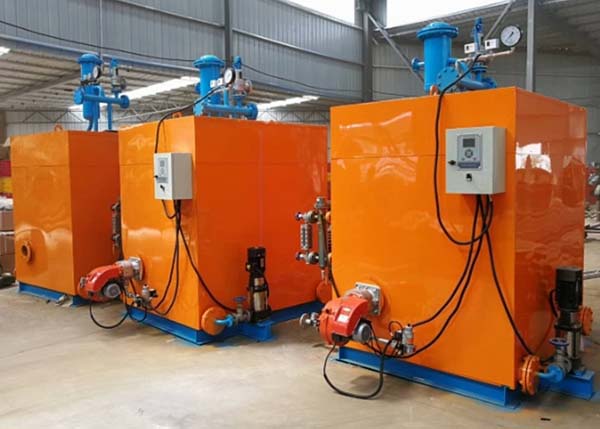
Equipment used in this kind of plant: wns gas steam boiler and economizer. The industry side is covered in this solution page, and project cases show comparable installations.
Background reading: external reference on steam and process heat.
Questions plant engineers ask
How much fuel does an economizer save?
Typically 4-7% on natural gas when the stack is taken from about 200 °C to 135 °C. The saving falls if the boiler runs at low load or the fins are dirty.
What stack temperature should a gas boiler have?
About 130-150 °C at normal load with an economizer. Much lower risks condensation; much higher means heat is being wasted.
Related note: 6 t/h Gas steam boiler in Kazakhstan: Water chemistry is the real warranty


