
8 t/h · steam boiler
8 tonne steam boiler: output, fuel bill and price band
Eight tonnes per hour — 8,000 kg/h, 5.6 MW — is the fork in the road. Both fire-tube and water-tube designs are quoted at this size, and the choice follows the load profile more than the price: fire-tube for steady industrial duty, water-tube where the load swings or where steam is needed quickly after a cold start.
Where this size fits
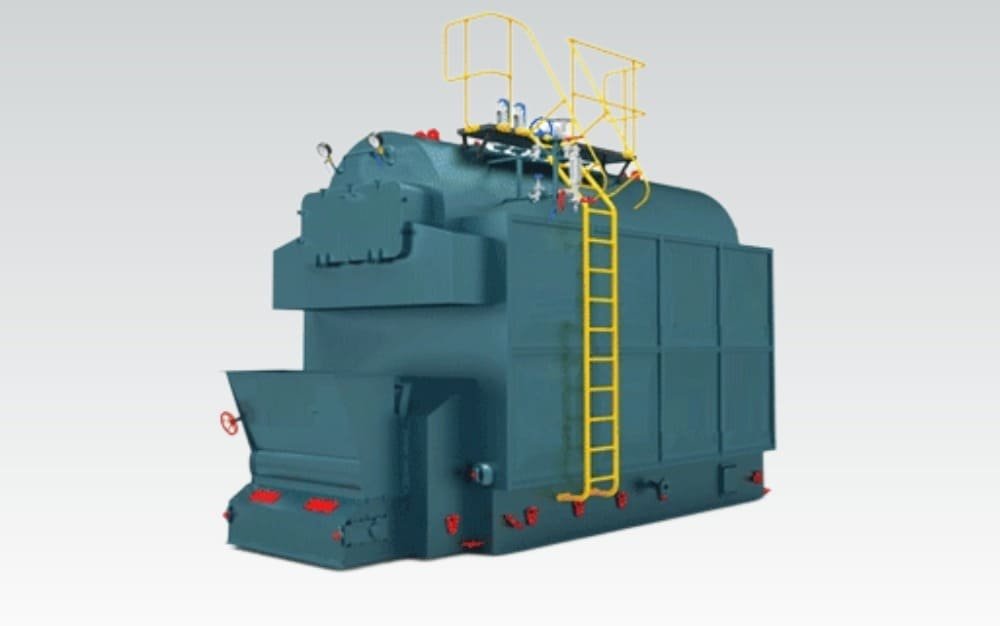
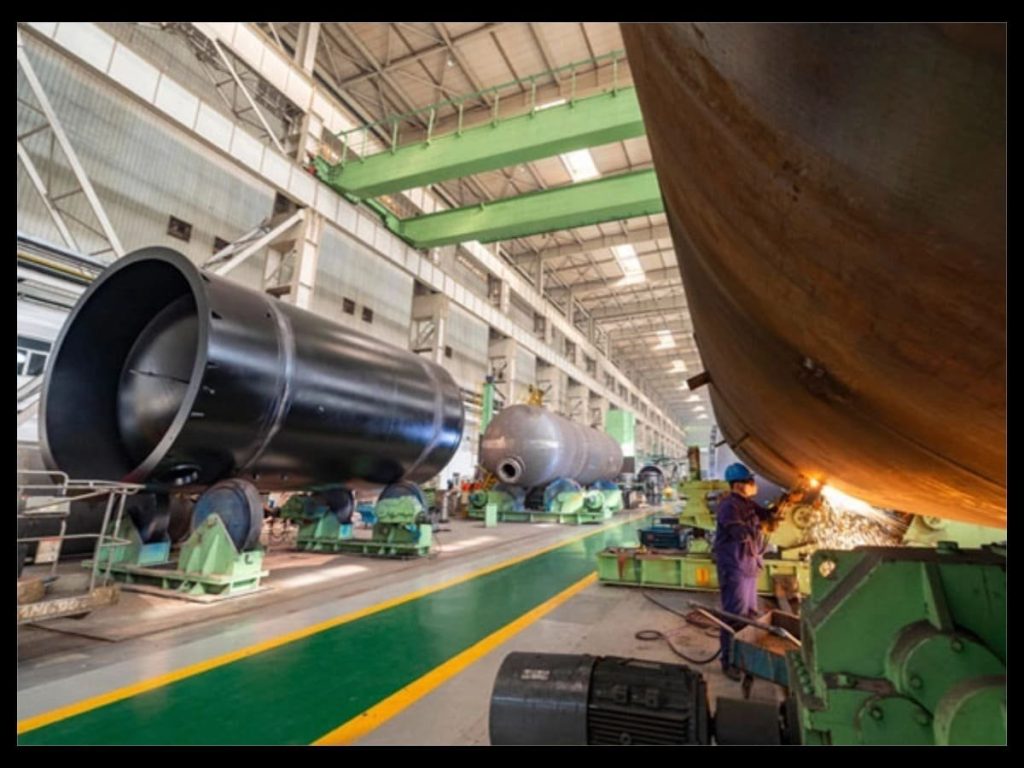
A packaged 8 t/h fire-tube is a large object: roughly 9 m long, 3 m wide and over 30 tonnes. Road transport is possible in most markets but needs permits, and the crane at site has to be sized for the whole shell. A water-tube unit in shipping sections costs more to erect and less to move.
For a continuous plant with a 5.5–7 t/h base load. If the daily pattern has a cold start and a fast ramp, the water-tube option on this page is the better match even at a higher price.
Load profile check
One shift
8 h/day at 80% load delivers about 51,200 kg of steam a day. Steam demand is concentrated; the boiler starts cold each morning.
Two shifts
16 h/day at 75% average is the usual sweet spot for this size: the unit stays in modulation and avoids a second cold start.
Continuous
24 h at 70–85% load is where the efficiency figures in this page actually hold. Below 50% load, expect the fuel cost per tonne to rise.
Machines at this output
WNS8-1.25-Y(Q)
Gas/oil, large packaged fire-tube
- Pressure
- 1.25 MPa
- Steam temp.
- 194 °C
- Efficiency
- 94–96%
- Indicative
- $54k–82k
SZL8-1.25-T
Biomass, assembled water-tube
- Pressure
- 1.25 MPa
- Steam temp.
- 194 °C
- Efficiency
- 87–89%
- Indicative
- $80k–115k
SZS8-1.25-Y(Q)
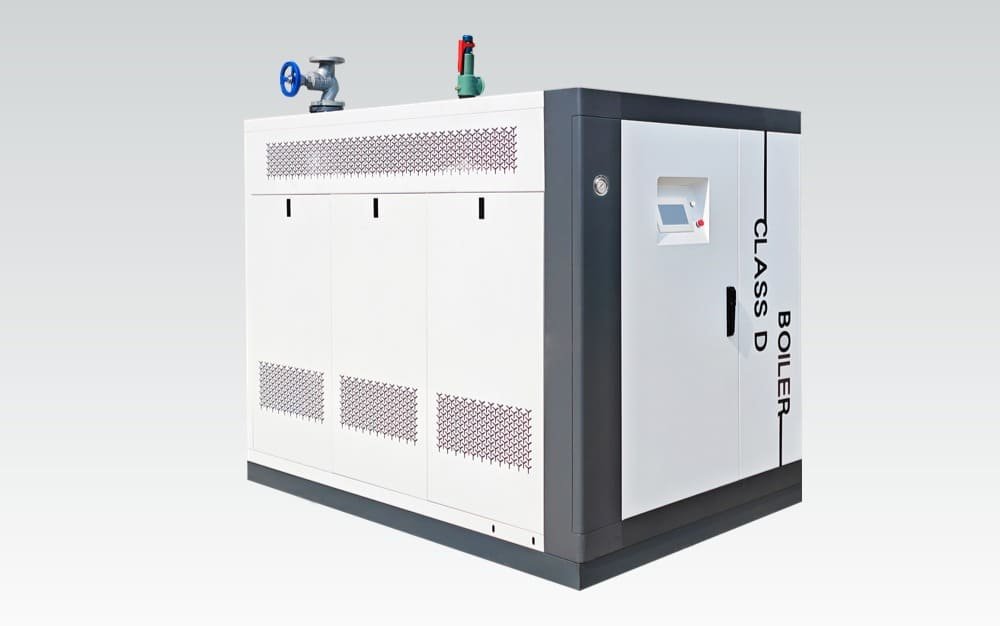
Gas/oil, D-type water-tube
- Pressure
- 1.25 MPa
- Steam temp.
- 194 °C
- Efficiency
- 94–96%
- Indicative
- $62k–92k
Efficiency ranges assume LHV basis and a clean unit at rated load. Local emission limits may require a low-NOx burner and, on gas, flue-gas recirculation.
What a tonne of steam costs
Basis: 600,000 kcal per tonne of steam at 1.25 MPa with 68 °C feedwater; gas 8,500 kcal/Nm³ at 0.46 USD/Nm³; diesel 10,200 kcal/kg at 0.95 USD/kg; biomass 4,000 kcal/kg at 0.16 USD/kg; coal 5,000 kcal/kg at 0.13 USD/kg. Efficiency 92% gas, 90% diesel, 86% biomass, 82% coal.
Natural gas
$35.29 per tonne · 614 Nm³/h · $282/h at full load
Light diesel
$62.09 per tonne · 523 kg/h · $497/h at full load
Biomass pellet
$27.91 per tonne · 1,395 kg/h · $223/h at full load
Bituminous coal
$19.02 per tonne · 1,171 kg/h · $152/h at full load
At eight hours a day and 300 days a year, the gas line alone is about $677,647 a year at full fire. Electricity, water, labour and maintenance are excluded.
Market price map
Equipment only
$54k–$82k
Boiler body, burner, control panel. Excludes feedwater, economiser, water treatment, flue and erection.
Packaged skid
$73k–$123k
Adds feedwater pump set, softener, economiser and the interconnecting pipework on a common frame.
Turnkey
+35–60%
Adds foundation, flue and stack, electrical, insulation, erection, commissioning and performance test.
At 8 t/h the burner, feedwater system and flue cleaning are together worth more than the pressure vessel. Bids that quote a boiler price without the auxiliary list are not comparable — ask for the balance of plant as a separate line and compare totals.
Typical duties
- Sugar and starch plants
- Textile plants with dyeing
- Plywood and MDF lines
- Food processing estates
For biomass at this size, ask for the grate area and the fuel specification separately. A unit sized on 4,000 kcal/kg pellets will not hold rated output on wet wood chips, and the shortfall appears as a capacity argument after commissioning.
Keep reading
Nearby sizes: 6 t/h boiler10 t/h boiler
Machines in this range
Closest reference projects
Questions buyers ask at this size
What does a 8 t/h steam boiler cost?
Indicative 2026 EXW range: $54k–$82k for a gas/oil packaged unit, $78k–$112k for a biomass chain-grate unit. Pressure, burner class, economiser and auxiliary scope move the figure by 20–40%.
How much gas does a 8 t/h boiler burn per hour?
About 614 Nm³/h at full load, assuming 8,500 kcal/Nm³ and 92% thermal efficiency. That is roughly $282 per hour at 0.46 USD/Nm³.
Fire-tube or water-tube at 8 t/h?
Fire-tube for steady load, lower capital cost and simpler operation. Water-tube for faster response, better part-load behaviour and a smaller footprint per tonne of steam. Above 8 t/h, water-tube is the normal choice; at 8 t/h it is genuinely a judgement call.
What is 8 t/h in MW and kcal per hour?
8 t/h is about 5.60 MW, 4,800,000 kcal/h, or roughly 512 boiler horsepower.
Sources and further reading
- Spirax Sarco — steam engineering tutorials: steam tables, enthalpy and blowdown practice.
- U.S. Department of Energy — steam systems: load profiling and steam-system efficiency measures.
- ASME Boiler and Pressure Vessel Code, Section I: the construction standard referenced by many export projects.
Fuel prices and efficiencies are stated assumptions for comparison, not quotations. Local fuel quality, altitude, feedwater temperature and part-load operation all shift the real number.